A budget tells your board what you expect to bring in and spend over the coming year. Get it right, and you won't be blindsided by a shortfall halfway through the year. Get too optimistic, and you'll run short on cash. The art is a budget that's realistic and still leaves room for the plans you want to carry out.
Start with your income, and be conservative
First, list out where your money comes from: dues, gifts, offerings, grants, revenue from activities. Base your projection on the actual numbers from past years, not on the best year ever. For uncertain income, such as one-time gifts or a grant that hasn't been awarded yet: it's better to estimate low than high. A pleasant surprise always beats a shortfall.
Map out your fixed costs completely
Fixed costs are the easiest to forget and the hardest to influence. Think rent, insurance, utilities, subscriptions, bank fees and maintenance. Go through last year's bank statements and check off every recurring line item. Don't forget costs that only come around once a year, such as an annual insurance premium or membership administration costs.
A good rule of thumb: if you can't list your fixed costs within five minutes, you're probably missing a few. Last year's books are your best memory aid.
Plan your variable costs and projects
Beyond fixed costs, there are costs that move with your activities: supplies, an event, a project you want to tackle this year. Link these to concrete plans as much as possible, so the board can see what the money is for. Do you have restricted funds for a specific purpose? Keep those separate in your budget.
Set aside reserves
A healthy organization keeps a buffer for unexpected expenses and for major future replacements, a new roof, replacing equipment, an unexpected setback. Include a reserve in your budget, even if the balance looks healthy. This keeps a one-time hit from putting your organization in trouble.
Close it out and discuss it
Add up your income and expenses and look at the result. Comes out negative? That's not a disaster, as long as you consciously choose to draw on reserves. Comes out with a large surplus? Explain what you plan to do with it. Present the budget clearly to your board or membership meeting, so everyone knows where things stand.
How Tutelium helps
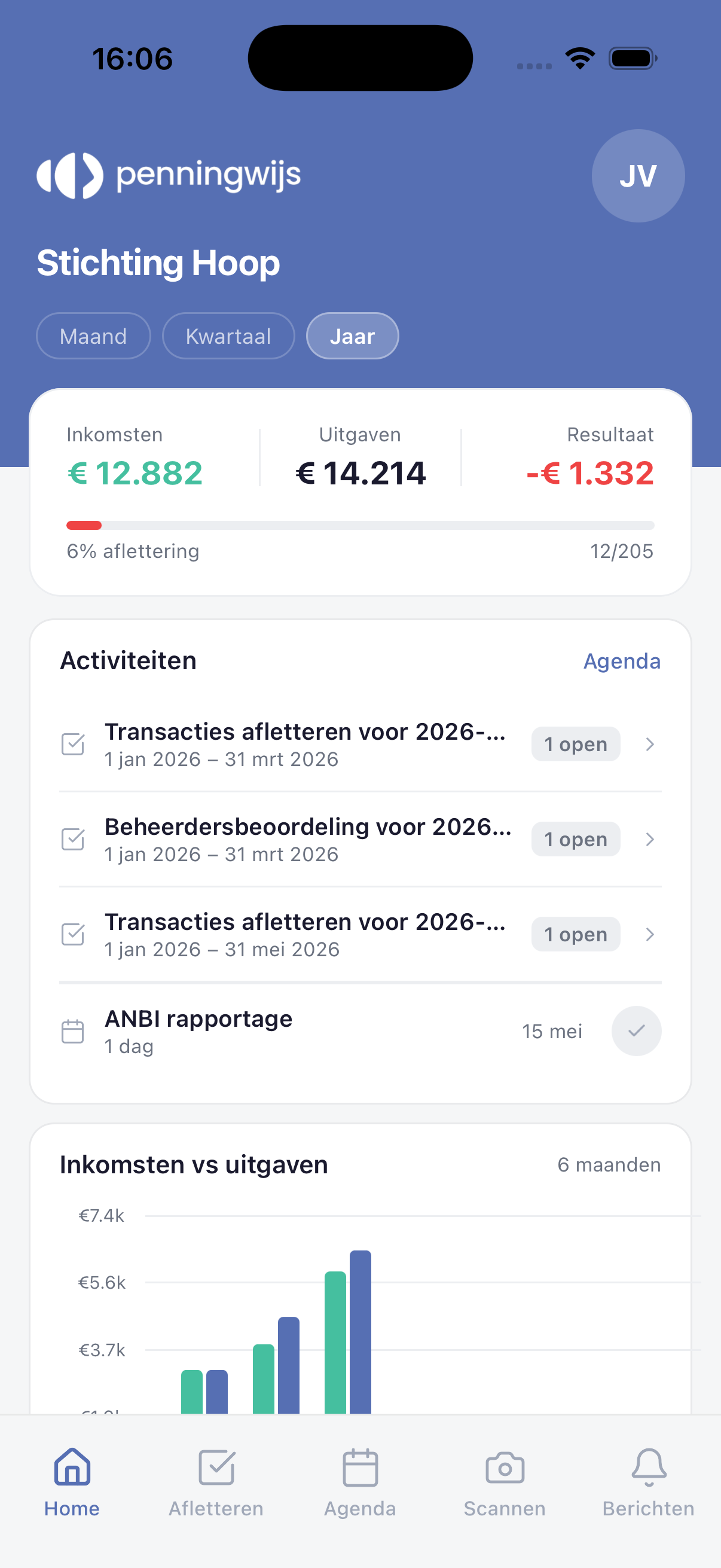
In Tutelium, you place your budget right next to your actual numbers, all year round. You immediately see per category whether you're ahead or behind plan, without updating a spreadsheet. That turns your budget into a steering tool instead of a document that disappears into a drawer after January.
Keep reading
Want to keep the balance of restricted projects clearly separated? Read restricted funds: how to keep them separate. Or see how to use the budget during the annual financial review.