Most financial stress at volunteer-run organizations doesn't come from complicated rules, but from deadlines that show up too late. Anyone who breaks the year into fixed moments avoids last-minute scrambles and IRS notices. Below is the annual rhythm for a US nonprofit. Note: exact dates depend on your fiscal year and your state, so use this as a rhythm, not as legal advice.
January – close the books and send the forms
As soon as the fiscal year ends, the closing process begins. Gather the last receipts, reconcile every account, and start on your financial statements. January also brings two hard federal deadlines if you paid people during the year:
- 1099-NEC to any contractor you paid $600 or more, and file copies with the IRS, by January 31;
- W-2 forms to employees, and file with the SSA, by January 31.
First quarter – financial statements and board review
- Prepare the financial statements: the statement of financial position (balance sheet) and statement of activities for the past year;
- Internal review: have your finance committee or an independent reviewer check the numbers before the board meeting;
- Adoption: the board formally approves the financials, and the treasurer's report is on record.
By May 15 – file your Form 990
Your annual information return is due by the 15th day of the 5th month after your fiscal year ends. If your year matches the calendar, that's May 15. You can request an automatic six-month extension with Form 8868. One warning worth repeating: miss the filing for three years in a row and the IRS automatically revokes your tax-exempt status.
Put your Form 990 date on the calendar now, with a reminder a month ahead. It's the deadline treasurers most often overlook.
Don't forget your state
Federal isn't the whole picture. Most states require nonprofits to keep two things current, each with its own deadline:
- Annual report or registration with the Secretary of State, to keep your entity in good standing;
- Charitable solicitation registration (and its yearly renewal) if you fundraise — and often in every state where you actively solicit donations.
Dates and requirements vary a lot by state, so confirm yours with the state agency or your accountant.
All year round – ongoing obligations
- Payroll tax deposits and quarterly Form 941 filings, if you have employees;
- Sales tax filings, where your activities make you liable;
- Grant reporting, each with its own deadline per funder;
- Interim reports to the board, for example every quarter.
Fall – budget for next year
A good treasurer prepares next year's budget in the fall, so the board can discuss and approve it before the year begins. That way you start the new fiscal year with a clear plan instead of reconstructing one after the fact.
How Tutelium helps
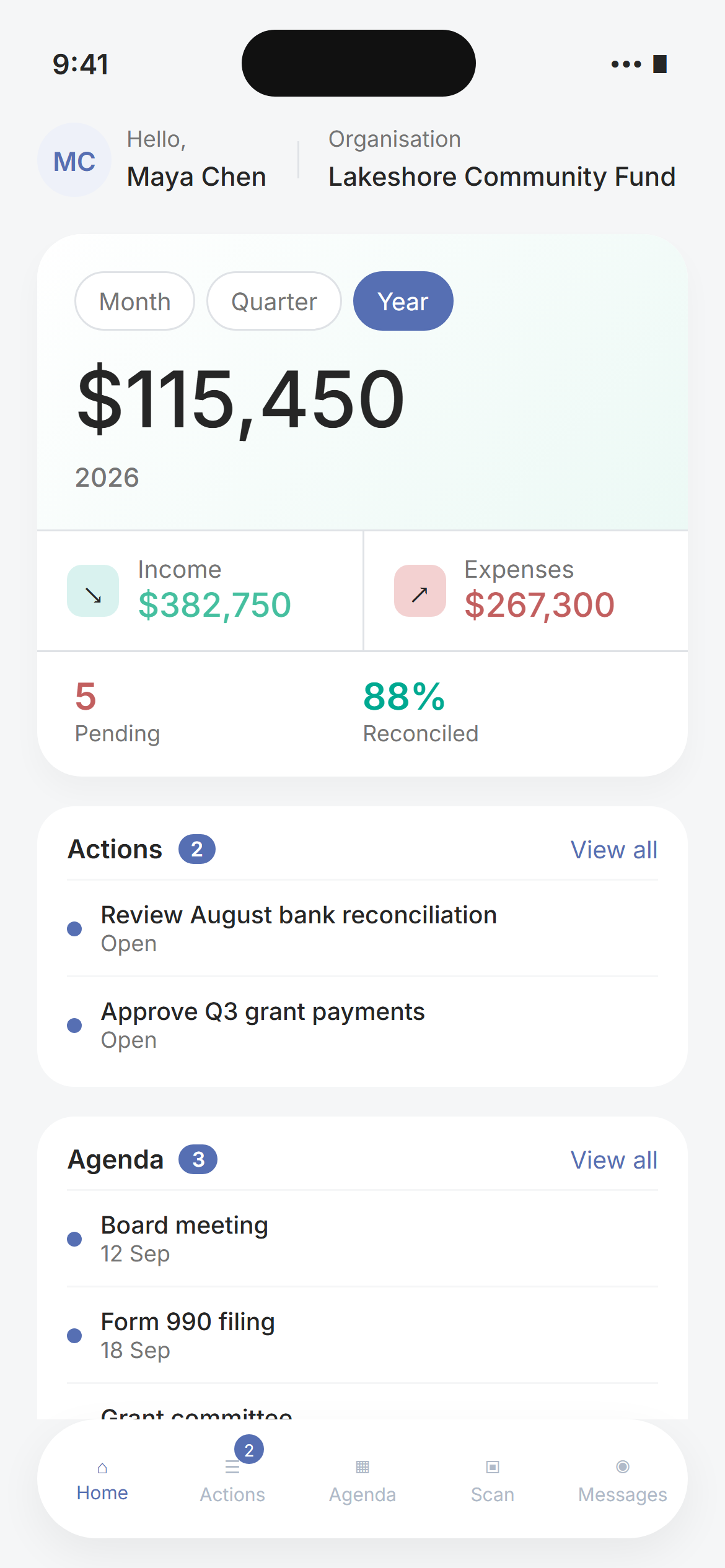
Tutelium keeps a financial calendar with your recurring obligations and reminds you in time. Because your books stay up to date all year, your financial statements are largely ready as soon as the fiscal year closes. No more deadlines that catch you off guard.
Keep reading
Prepare for the key moments: read our step-by-step plan for the financial review and the explanation of the 501(c)(3) public disclosure rules.